



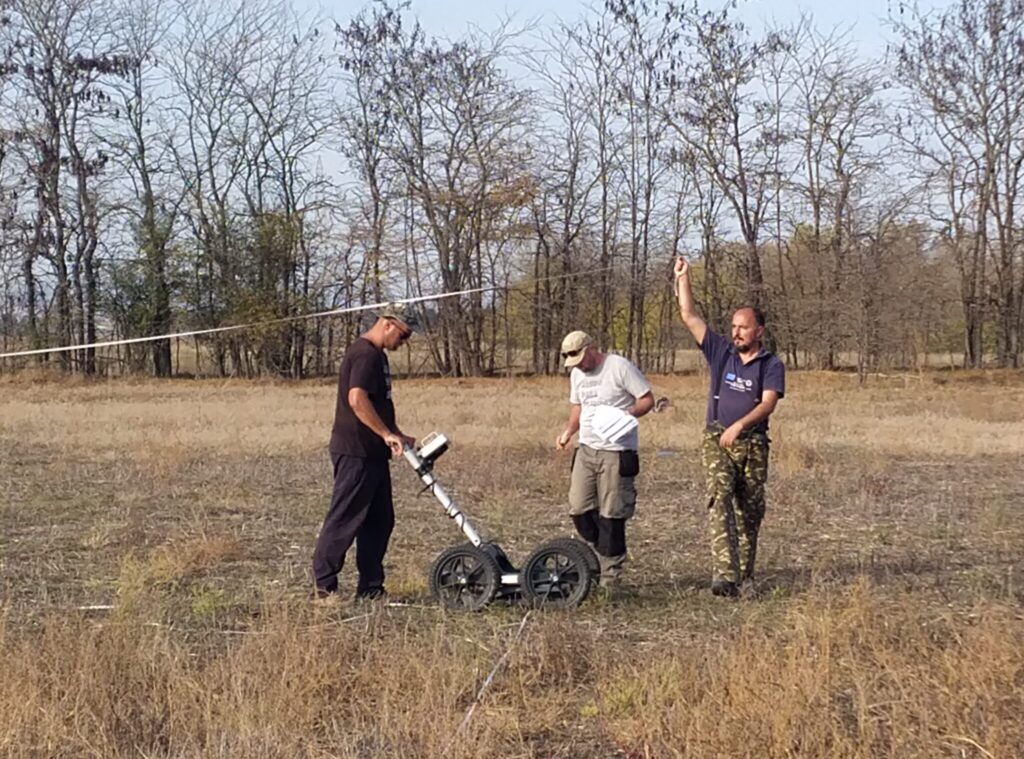
NI Museum Kumanovo, in partnership with the Archaeological Museum of the Republic of North Macedonia, completed the implementation of the project "Digitizing archaeological contents of the locality Gradishte - Ml. Nagoricane and Crkvište - Klečovce". Through this cooperation, a scan of more than 8 km of surface was carried out using the most modern Georadar technology owned by the Archaeological Museum.
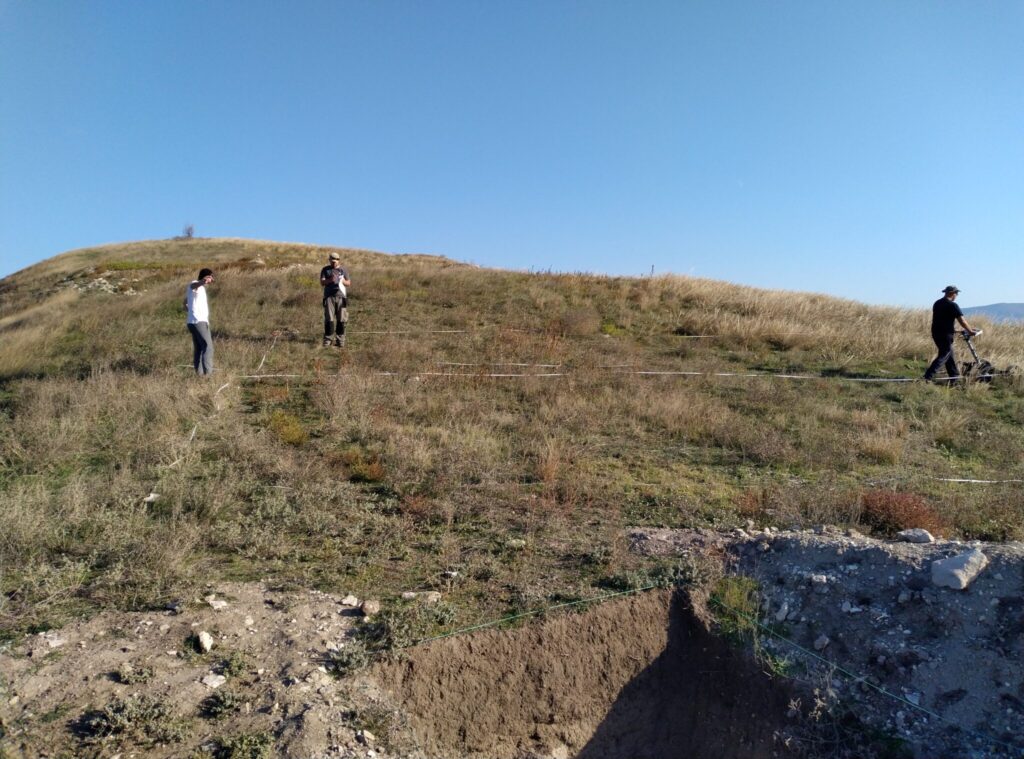
The Gradishte – Mlado Nagoricane site is a rich site from the Hellenistic period, with well-preserved structures, which are visible on the images. The images were concentrated on the Lower Terrace, where excavations have been carried out recently, and where a plan for the direction of future research should be obtained.
The Crkvište – Klečovce site is a settlement from the late Roman period, where an early Christian church with associated buildings has been fully explored. The surveys were focused on several segments of the settlement, and were based on previous research – reconnaissance, through which the density of the findings was determined. The findings will be used for planning future research locations.
Incidentally, both sites have previously been the target of geophysical surveys, both from the funds of the Ministry of Culture and from international cooperation. The National Museum of Kumanovo remains one of the rare institutions dedicated to the use of modern technologies within archaeological research, a practice that has been established for decades in developed countries.
The research was funded by the Ministry of Culture of the Republic of Macedonia, under the leadership of Dejan Gjorgievski and Miroslav Petkovski, and the georadar was operated by Radomir Ivanovic from the Archaeological Museum of the Republic of Macedonia.
The results will be published as soon as possible.
Leave a Reply